


Forester Wilderness Leaps Ahead in “Adventure Crossover” Comparison
It was the imagery of a rugged outdoor lifestyle that sparked the SUV trend in the 1980s. The SUVs of the time rode rough on truck chassis, had few interior amenities, but offered true off-road ability with 4-wheel drive (4WD), two-speed transfer cases, and lofty ride heights. The addition of four doors to models in the mid-1980s made them practical, if not particularly comfortable, for family use.
In the mid-90s, the Toyota RAV4 emerged as a vehicle that looked like an SUV and had all-wheel drive (AWD), which sounded like “4-wheel drive” but was built on a car platform, making it more comfortable and fuel-efficient. The “crossover” was born, and over the next few decades, it took over the industry. The choices proliferated. There were big ones and bigger ones, small ones and smaller ones, and basically anything with a long roof, and available AWD (or not), was labeled an SUV. Today, the crossover SUV has become the default vehicle for any household, and the compact crossover is the best-selling category in the country. As a result, however, much of that off-road imagery has faded away.
So now manufacturers are going to great lengths to bring back that rugged imagery through off-road-focused trim levels on their crossover vehicles. How well do they deliver on that rugged appearance? AutoBlog editor Cole Attisha has driven each of the four primary off-road versions of Japanese crossover models over the past few months and put them through the paces, determining that only one truly delivered notable off-road ability. The models include the Nissan Rogue Rock Creek, Honda CR-V Trail Sport, Toyota RAV4 Woodland in both hybrid and plug-in hybrid forms, and the Forester Wilderness. As this is a Michael Hohl Subaru blog, you may not be surprised that the Forester was deemed the most off-road capable. What may surprise is that it was deemed far more capable. Second place was a very distant second.
None of these vehicles is intended to be a pure off-road toy like a Jeep Wrangler or Ford Bronco. All are expected to handle daily commuting and/or household duties, with perhaps an occasional weekend jaunt off the pavement. The minimal action to make these off-road-focused vehicles is standard AWD, all-terrain tires, a more robust roof rack, and more rugged-looking trim.
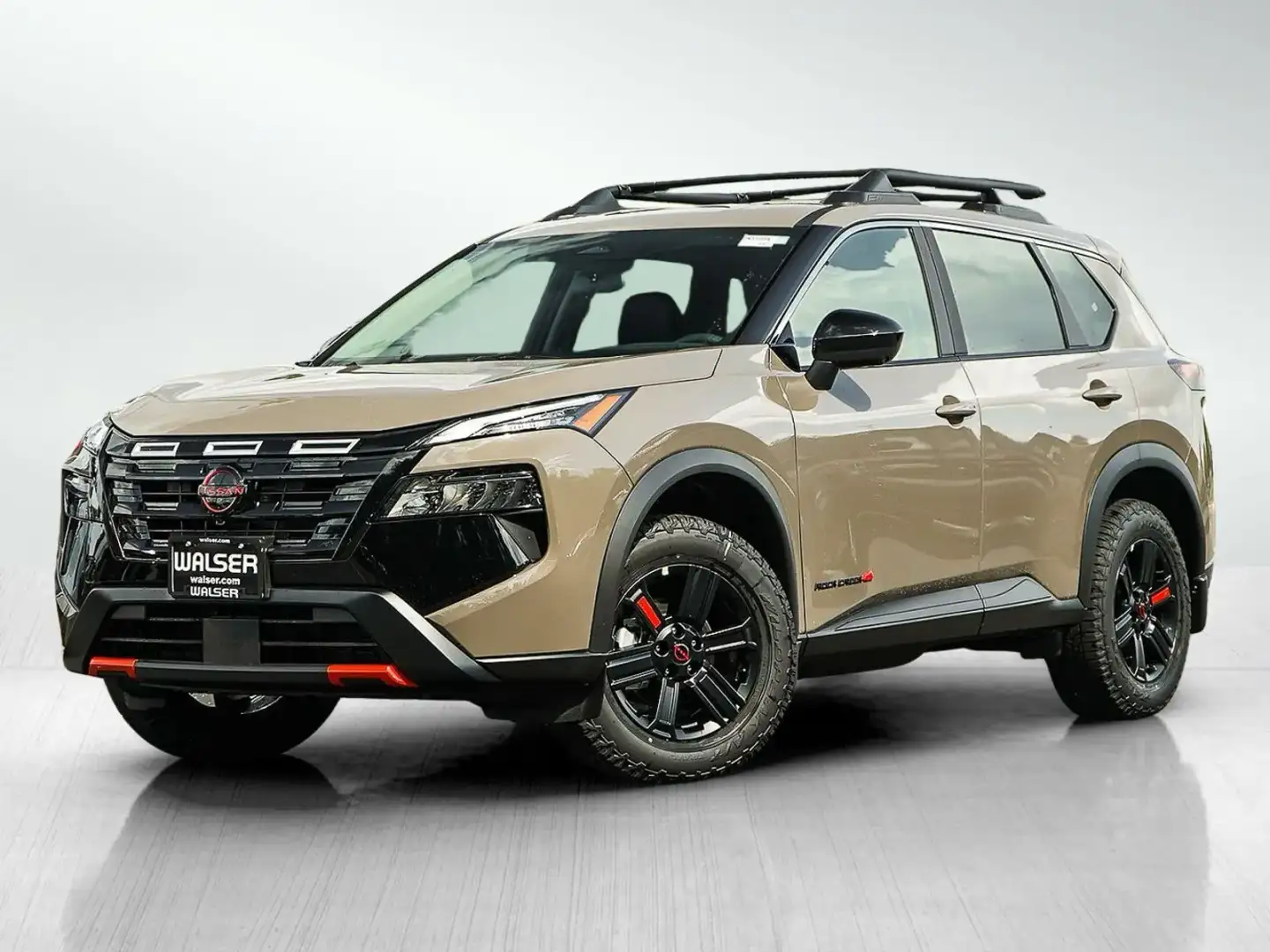
This describes what was done to the Rogue Rock Creek. Its 8.2 inches of ground clearance is far less than the 8.7-inch ground clearance of a base Forester. After the all-terrain tires and burly roof rack, the rest is an aesthetic exercise. Its 1.5-liter 3-cylinder turbocharged engine and CVT simply didn’t respond well to uneven surfaces. As the oldest design in the group, it looked it, though on the road it redeemed itself with the best non-hybrid mpg and also had the lowest price.
Next up in the ranking was the Toyota RAV4 Woodland. Its standard hybrid drivetrain is an efficiency standout, and its 3,500-pound towing capacity matches the Forester for the highest in the group. Along with the roof rack and all-terrain tires, the Woodland gets a slight lift from 8.1 to 8.6 inches of ground clearance, while the 236-horsepower hybrid drivetrain is the most powerful in the group, aside from its Plug-in Hybrid sibling. It is dinged for its $39,000 starting price, which tops all except its Plug-in sibling.
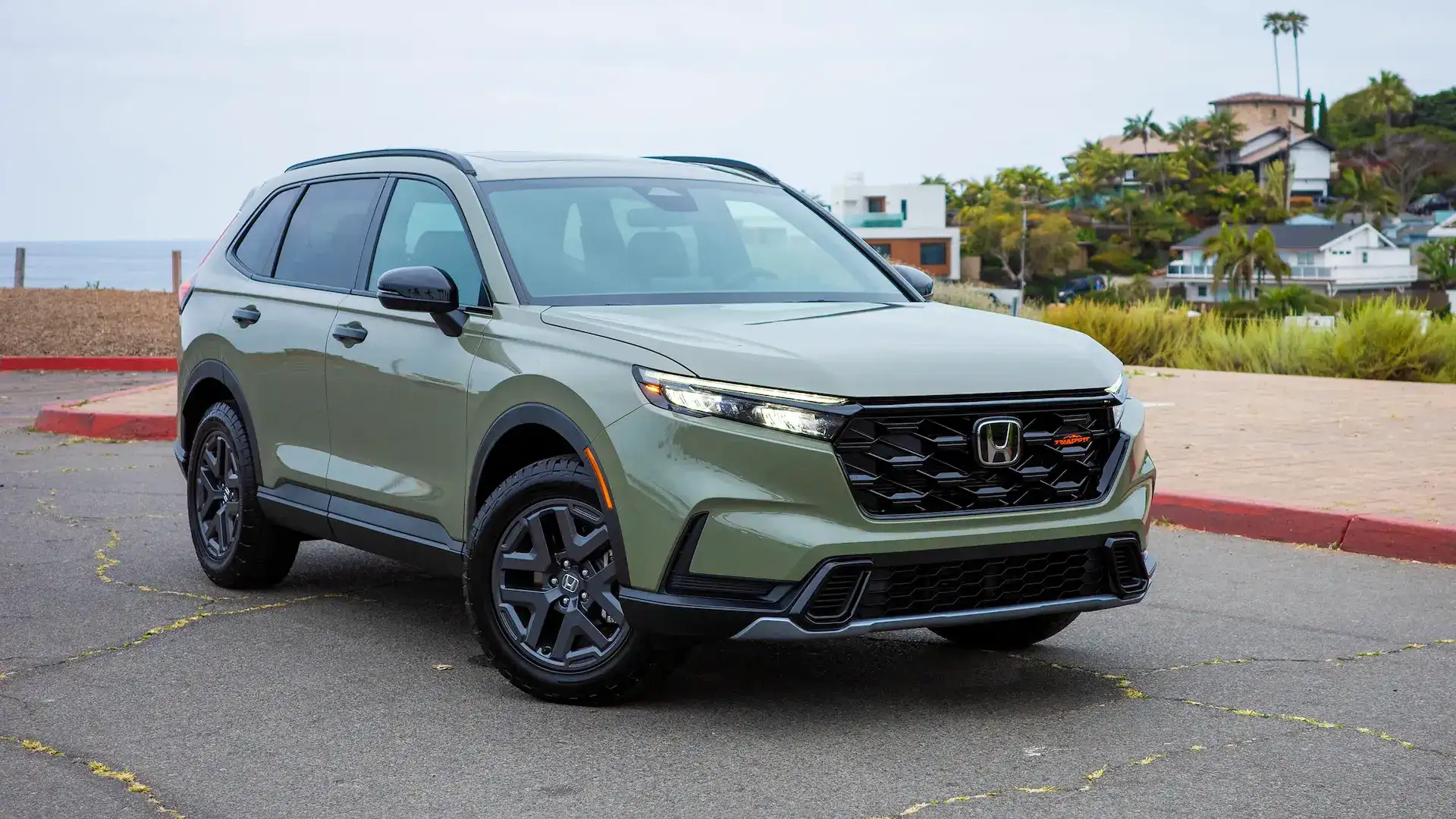
Enhancements to the Honda CR-V Trail Sport Hybrid are even fewer than those of the Rogue. It gets all-terrain tires, and that is about it, aside from TrailSport badging and different seat surfaces. The ground clearance remains at 8.2 inches. It can tow only 1,000 pounds, and even the roof rack is unchanged. The CR-V ranked higher than the Rogue and RAV4 due to its on-road competence, spacious cabin, and hybrid efficiency. The Passport TrailSport actually has some impressive off-road chops, but that enhanced ability didn’t make it to the CR-V.
The RAV4 Woodland Plug-in Hybrid ranks higher than the other Woodland model, not because of increased off-road ability, but because making the motors powerful enough to propel the vehicle for an estimated 49 miles results in 324 combined horsepower, which significantly exceeds that of any model here. On the other hand, it starts at $44,815, so it will involve some math to determine how long it will take to come out ahead in overall costs.
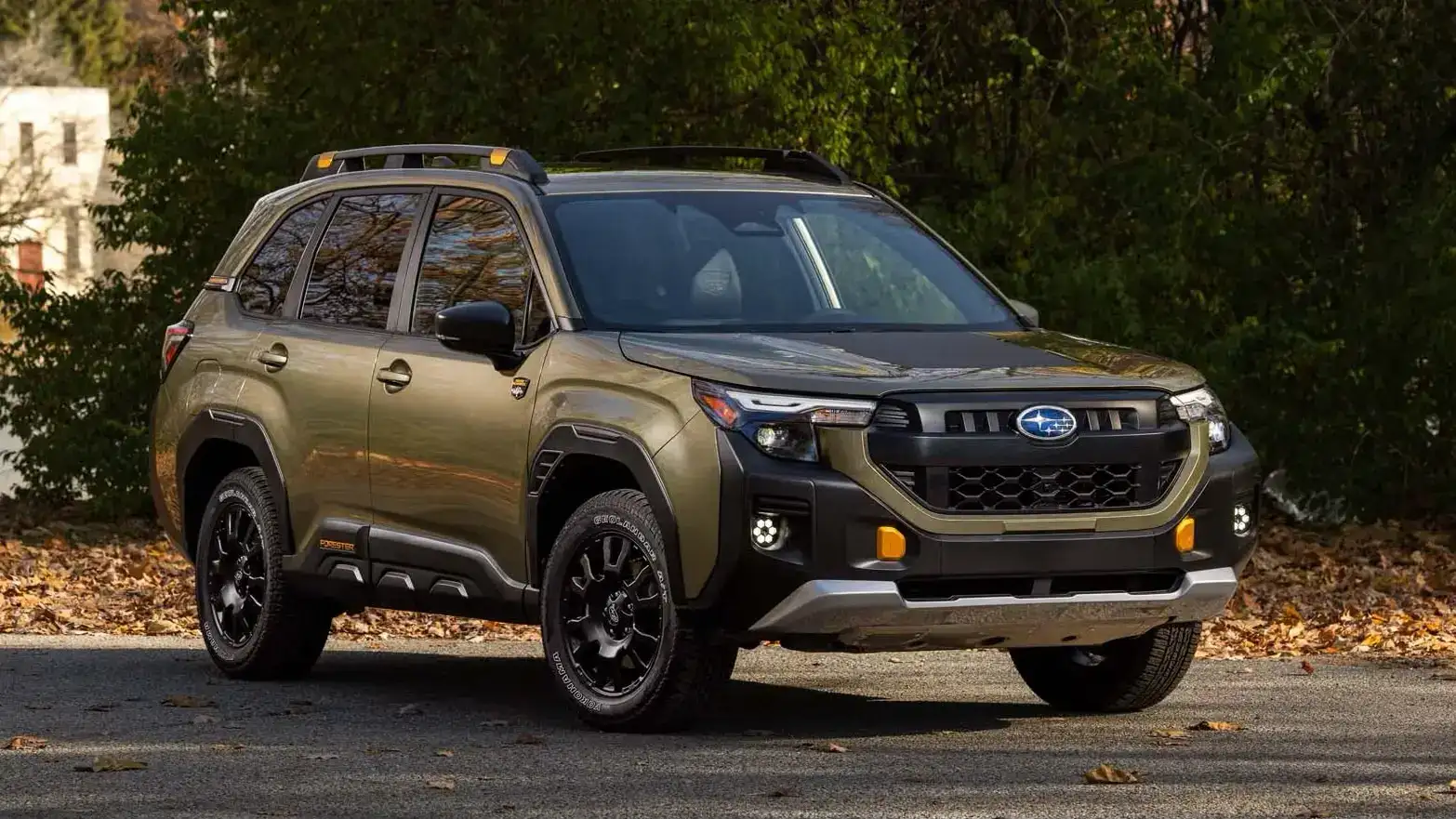
Subaru has been in the 4WD/AWD game much longer than the other brands here, and it shows in its commitment to making the Wilderness live up to the name. Ground clearance is raised to 9.3 inches, resulting in 23.5-degree approach, 21-degree breakover, and 25.5-degree departure angles. The terrain-specific X-Mode functions are quite effective. A full-size spare is standard, and the roof rack can hold 220 pounds on the road and 800 pounds stationary for an occupied roof tent.
It doesn’t stop there. Inside, there are all-weather floor mats, and the StarTex® seat upholstery is waterproof, easy to clean, and scratch- and puncture-resistant. With a starting MSRP of $38,385, the Forester Wilderness is also the second-least expensive model in the group, beaten only by the Rogue Rock Creek.
Author Attisha was astonished by the off-road route Subaru set for the Forester Wilderness press event: “The severity of Subaru’s chosen route genuinely shocked me.” But the Wilderness showed how well it could take on terrain that would leave the others behind. And while still not in the league of a Wrangler or Bronco, the Wilderness made its way through challenges that most drivers of those vehicles will likely never encounter.
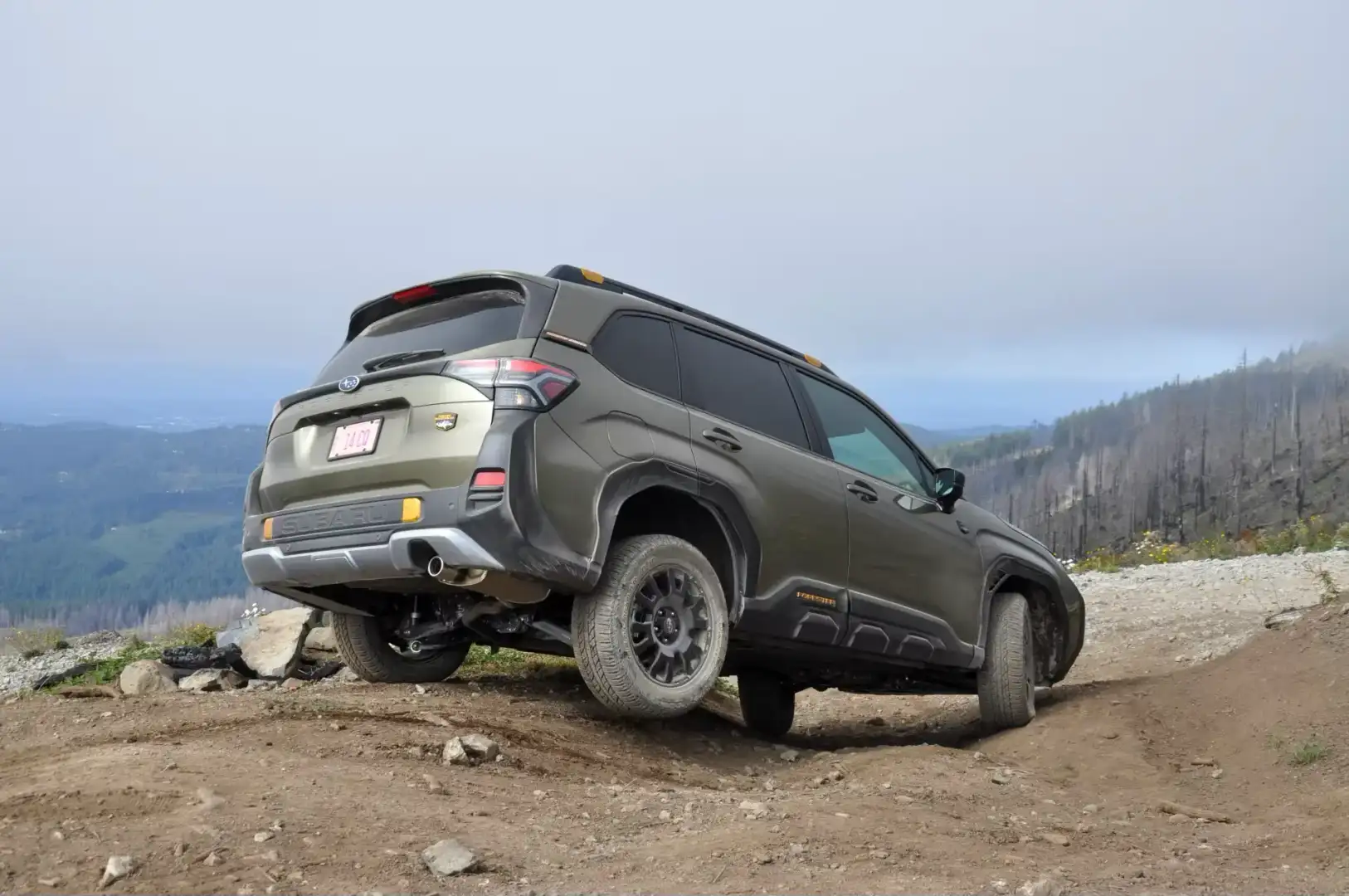
So, there you have it. If you want a compact crossover that looks ready to take on off-road challenges, you have plenty of choices. But if you want a model that actually walks the walk, the choice is clear: the Subaru Forester Wilderness, which we invite you to experience for yourself at Michael Hohl Subaru.
0 comment(s) so far on Forester Wilderness Leaps Ahead in “Adventure Crossover” Comparison